Pilot Sites of the Project
Germany - RWTH - Test Hall

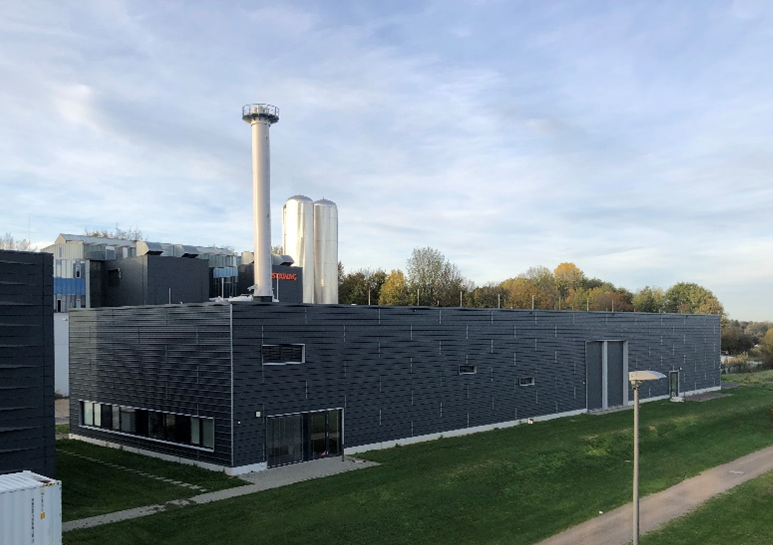
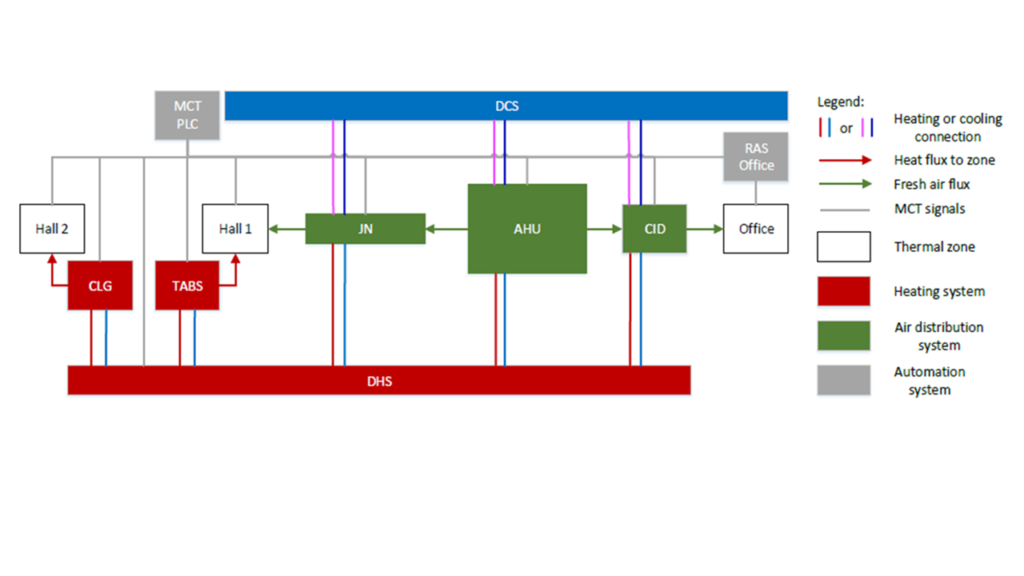
The trial site, a test hall at the Chair of Building and Room Climate Control, is a versatile space that is divided into three thermal zones, each supplied with energy differently. Within an office area, multiple offices, meeting rooms, a kitchen, and restrooms are accommodated, providing a realistic setting for various tests. A variety of different test benches are housed in the structurally separated hall sections 1 and 2.
The hall is connected to a district heating and cooling network, ensuring a reliable energy supply. A central ventilation system (AHU) supplies fresh air to Hall 1 and the office area. In both areas, decentralized units (jet nozzles (JN) and ceiling injection diffusers (CID)) can adjust the supply air temperature and volume flow rate, providing a comfortable environment for testing. In addition to the central AHU, Hall 1 is equipped with a concrete core activation (CCA), further enhancing the energy efficiency of the system. Hall 2 is supplied with heat from the district heating via ceiling radiant panels (CLG).
As part of Ecom4Future, the district heating in the hall is replaced with a simulated heat pump, facilitating the coupling to the electrical grid. Through a bottom-up approach, the hall’s available flexibility is calculated and traded on simulated local flexibility markets. Special focus is placed on the flexibility in the heating system and the thermal mass of the building through changes in room temperatures. User feedback from the hall occupants allows for further optimization of flexible operating modes.
Germany - RWTH - Hardware in the Loop (HiL) test bench
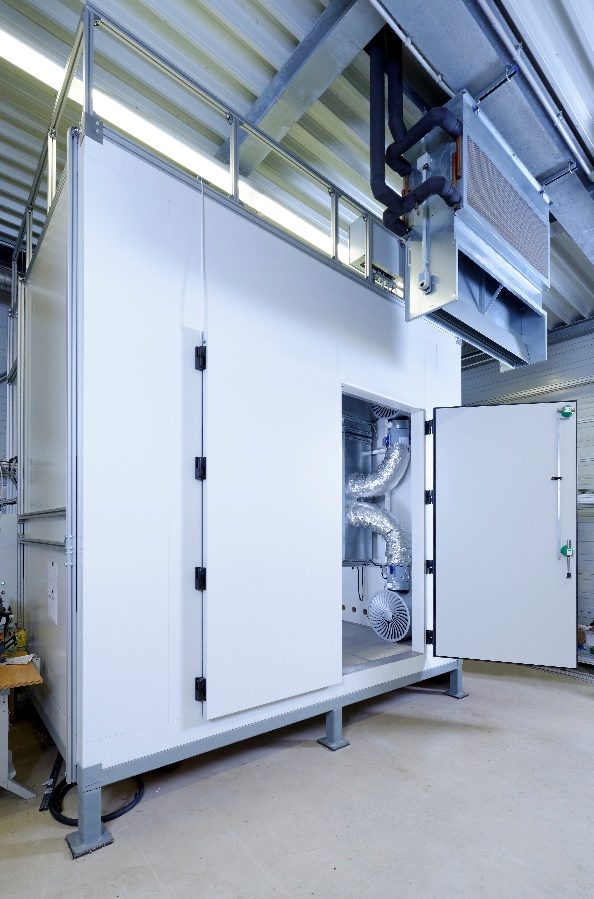
The hardware-in-the-loop (HiL) approach for building energy systems combines real hardware with real-time dynamic simulation models. The boundary between hardware and simulation is freely selectable. However, complex components of the energy conversion system, for example, a heat pump or a PV inverter, are usually installed as real hardware in the laboratory. Components that are not part of the technical supply system, such as the building envelope, can be represented by a dynamic simulation. After coupling the existing hardware with the modeled software, the states of the components are interdependent. For example, if the heat pump is in a faulty state, the rooms in the building cool down over time. Thus, highly dynamic tests are feasible under broad boundary conditions and high repeatability.
Buildings can be displayed in room resolution at the lowest level of detail. External boundary conditions such as temperature and solar radiation are precisely considered. Models are available for the heat transfer system for radiator systems, underfloor heating systems, and concrete core activation. Each heating circuit can be controlled by a controller integrated into the model or by other software. Other components that can be simulatively integrated are thermal storage units, photovoltaic and solar thermal systems, battery systems, and geothermal probes.
As part of Ecom4Future, we utilize the HiL test bench for participation in local flexibility markets. By simulating a residential building in the HiL test bench and incorporating the trial site test hall, both non-residential and residential buildings can be analyzed in flexibility markets. For this trial site, the focus is on the heat pump and, thus, on the coupling of heat and electricity, which effectively complements the thermal investigations of the experimental hall.
Germany - SWW - energy sharing community in Wunsiedel in the Fichtelgebirge
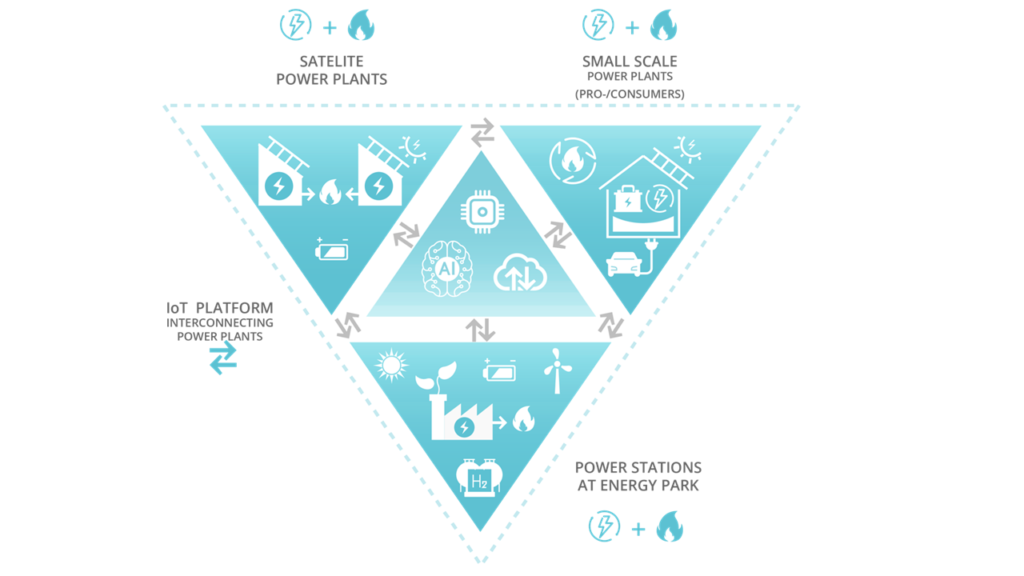
The pilot project for Germany’s first energy sharing community is located in Wunsiedel in the Fichtelgebirge. The initiative is supported by SWW Wunsiedel GmbH, which operates as an energy supplier in Wunsiedel and seven neighboring municipalities. SWW founded the “WUNergy” producer community with the aim of actively involving residents in the energy transition. This initiative allows members to share and trade their self-generated energy with each other.
The pilot community consists of producers, consumers, prosumers and various storage technologies, with SWW acting as the central interface. As a supplier, metering point operator and grid operator, it takes on essential tasks in the energy supply.
To integrate this community into the existing energy system, both market- and grid-specific communication channels are being established. Organizationally, this includes establishing a legal form and defining the necessary roles within the community, as well as developing strategies to activate the members. Technologically, all participants will be equipped with smart metering system and a combination of different software solutions is used for community management, monitoring, visualization, aggregation and optimization of energy generation and consumption, system control and market access. For this part ECOM4Future provides and open EMS to run a parallel software-solution on a sandbox server.
Sweden - Chalmers Campus Energy Community Pilot



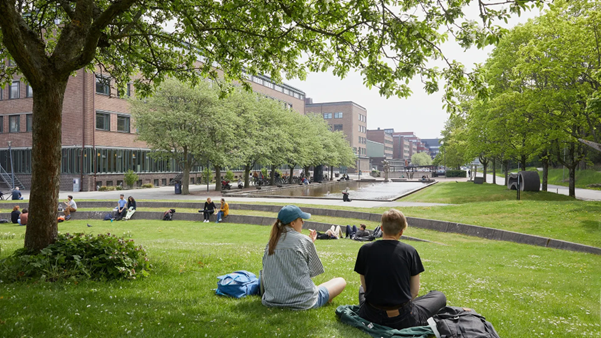
The Chalmers Campus Energy Community pilot aims to advance the existing Energy Management System (EMS) from the I-Greta project by incorporating elements such as the Local Energy Market, Local Flexibility Market, and innovative grid tariff designs. The ultimate goal is to develop a flexible local energy system and create a comprehensive roadmap for transforming Chalmers Campus into a self-sustaining[NA1.1] Energy Community. Key objectives include reducing energy consumption, enabling energy exchange, and implementing Vehicle-to-Grid (V2G) mobility infrastructure.
Building on the success of the I-Greta project’s EMS, this pilot seeks to enhance the system’s flexibility and establish Chalmers Campus as a model Energy Community[NA2.1]. By integrating advanced energy management practices, the campus aims to become a benchmark for sustainable energy solutions.
The pilot will cover non-residential buildings managed by Akademiska Hus and residential structures, including the HSB Living Lab and the Gibraltar Guesthouse on Chalmers Campus. This diverse mix of academic, residential, and support facilities will serve as the foundation for the Energy Community.
Objectives
- Optimize Energy Consumption and Production: Focus on integrating renewable energy sources and implementing V2G technology.
- Develop a Flexible Local Energy System: Incorporate a Local Energy Market and Local Flexibility Market.
- Create a Sustainable Energy Community: Establish Chalmers Campus as a model for energy efficiency and sustainability.
Sweden - Jättesten Energy Community - Göteborg Neighbourhood Pilot
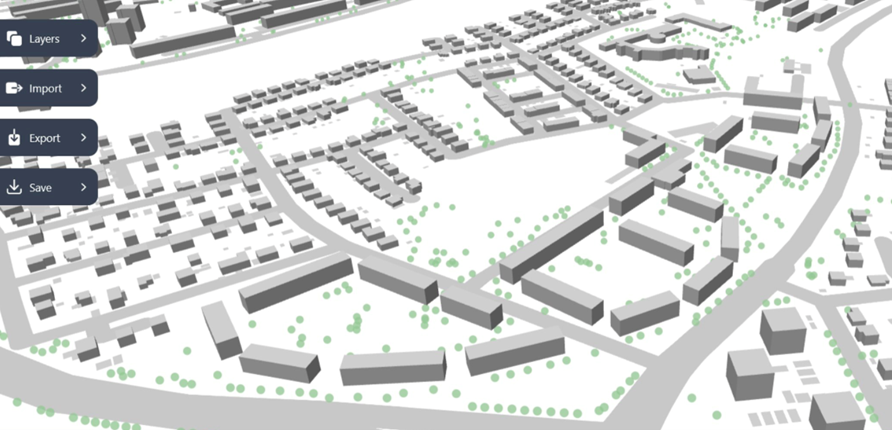
The Jättesten Energy Community pilot in Göteborg is a pioneering project aimed at transforming a neighbourhood of 24 residential buildings and a school into a model of sustainable urban living. The key innovation of this initiative lies in the strategic integration of photovoltaic (PV) panels, an advanced Energy Management System (EMS), and battery storage solutions to maximize energy efficiency and self-sufficiency within the community.
Building on proven energy management practices, the Jättesten project focuses on harnessing solar energy through widespread deployment of PV panels across the neighbourhood. This renewable energy is then optimized by the EMS, which intelligently manages energy production, storage, and consumption in real-time. The inclusion of battery storage ensures that excess energy generated during peak sunlight hours can be stored and used when needed, reducing reliance on the grid and enhancing the community’s energy resilience.
The Jättesten pilot is designed to serve as a blueprint for future urban energy communities. By leveraging these innovative technologies, the project aims to significantly reduce the neighborhood’s carbon footprint, lower energy costs for residents, and create a reliable, sustainable energy system. The involvement of residents in energy management decisions is also a key aspect, fostering a community-oriented approach to sustainability.
Objectives:
- Maximize Energy Production and Efficiency: Deploy PV panels throughout the neighbourhood and optimize their output using an advanced EMS, supported by battery storage.
- Develop a Self-Sustaining Energy System: Ensure energy independence by minimizing grid reliance through efficient energy management and storage solutions.
- Create a Sustainable Energy Community: Establish Jättesten as a leading example of how urban neighbourhoods can achieve energy self-sufficiency and sustainability through innovation.
Austria - Energy Analytics & Solution (EAS Lab) Lab - FHJ
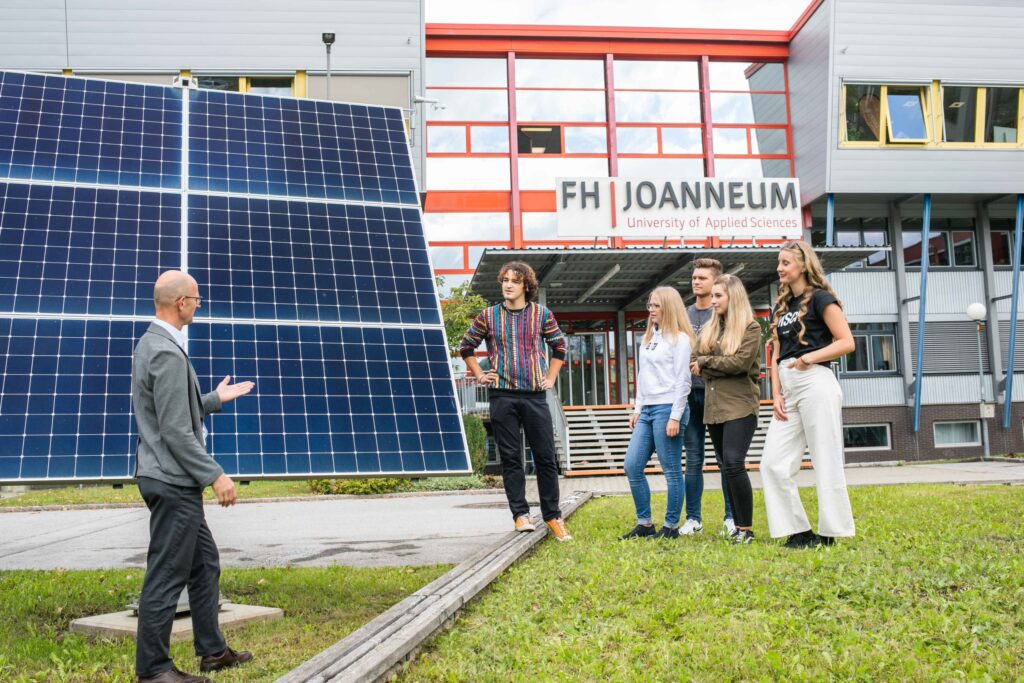
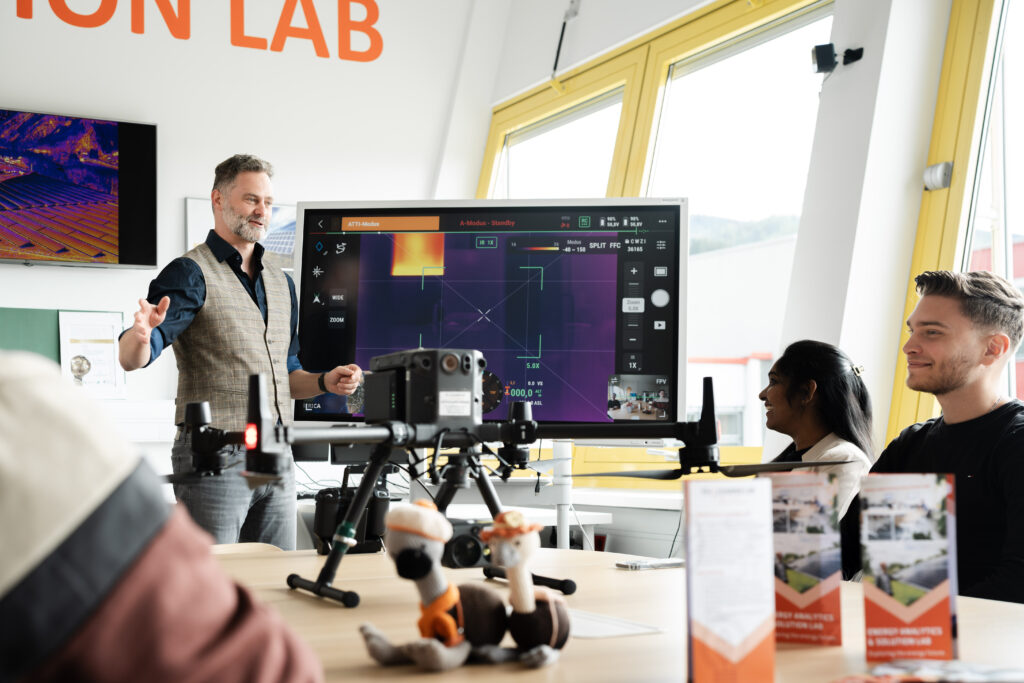
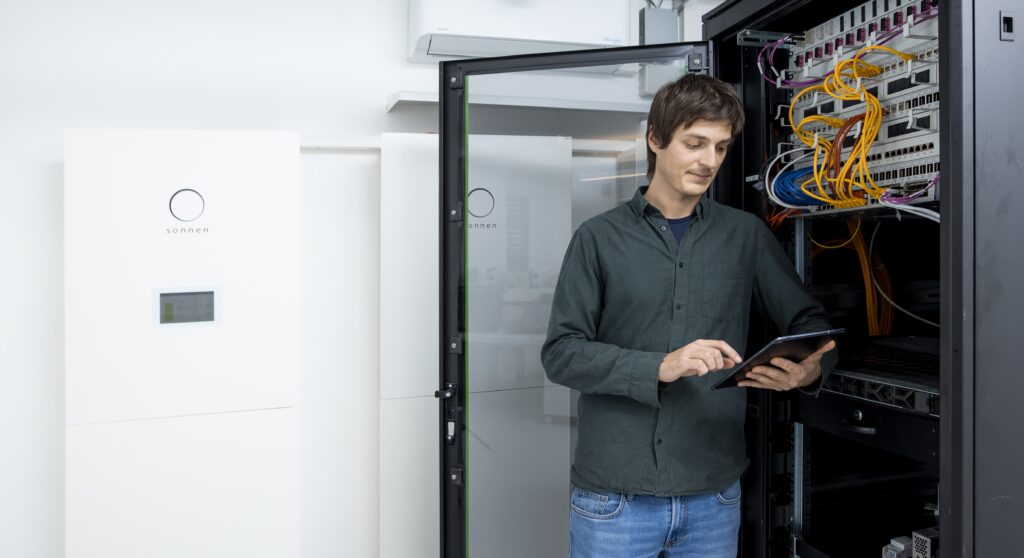
Located at two sites, the Energy Analytics & Solution Lab (EAS Lab) is a digitally networked energy research laboratory with a focus on sustainable power generation. The EAS Lab provides state-of-the-art research infrastructure for pioneering energy and mobility projects.
The EAS Lab, located at FH JOANNEUM Kapfenberg and FH Campus 02 Graz, comprises renewable power generation plants, hybrid grids including storage units, charging facilities for electric mobility plus the latest innovative measurement, automation and visualisation components.
The EAS Lab is supplied with electrical energy from several photovoltaic systems. The power can either be used directly, or stored or converted into other forms of energy (Power-to-X). A smart charging management system allows electric cars to be charged with self-generated solar power via a household wallbox (3.7kW-22kW) or via a quick charger (50kW DC and 43kW AC). All commercially available Type 2, CHAdeMO and CCS connectors can be used. Another field of research focuses on billing and pricing and involves the testing of different payment options and chip cards.
The smart home system provides a clear overview and allows the key building components (lighting, shading, air conditioning) to be controlled via a web portal or a mobile app. The automation system can be used to intervene in the control system and to remote control the partner lab. Different load and optimisation scenarios can be tested and evaluated in a realistic setting and the data can be fed into computer simulations for integration into a digital twin.
Another innovative focus is on sector coupling, i.e. the integration of different energy carriers. Heat and cold can be produced from self-generated solar power and the integrated solar thermal system and can be stored or used for water heating or for air conditioning. The hybrid storage unit is coupled to a solar collector, an electric heating element and a heat exchanger and thus allows heat to be supplied and distributed using different technologies. When room temperatures increase during the summer, the air-conditioning unit can reduce the temperature in the lab to an acceptable level using environmentally friendly solar power.
The energy flows are controlled not only via conventional software and display monitors but also via an interactive human-machine interface. Technologies such as virtual reality (VR) and augmented reality (AR) and 3D glasses can be used to navigate the lab and to visualise and control energy flows.
Austria - DiLT - Energiegemeinschaft Niedergrail
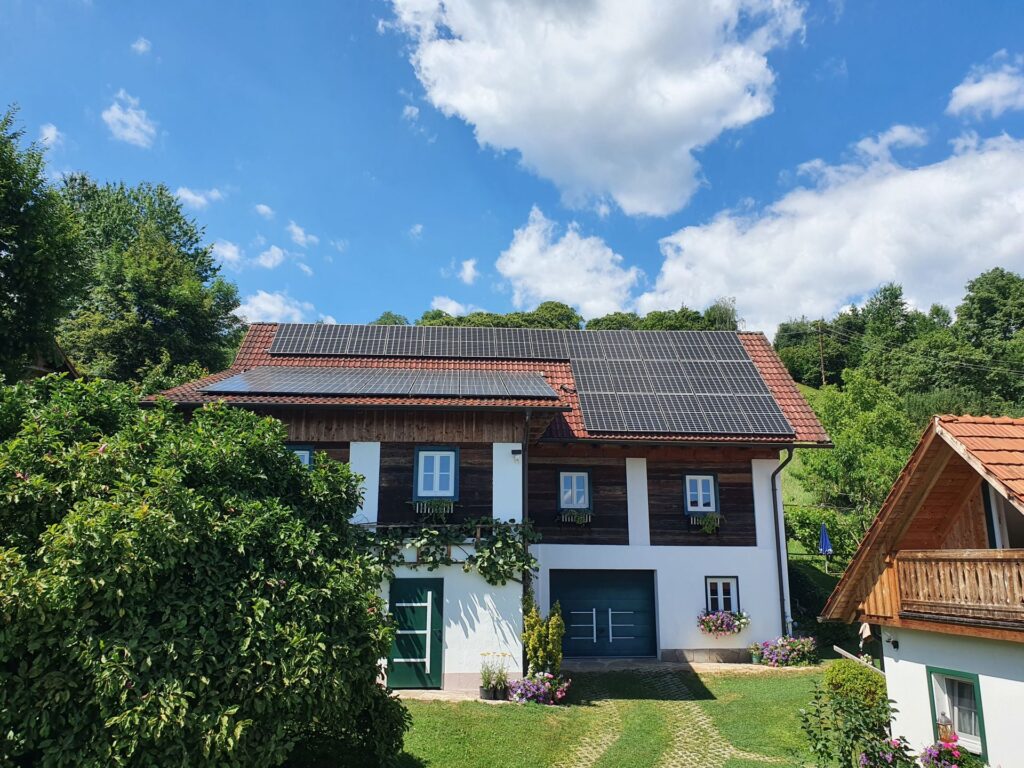
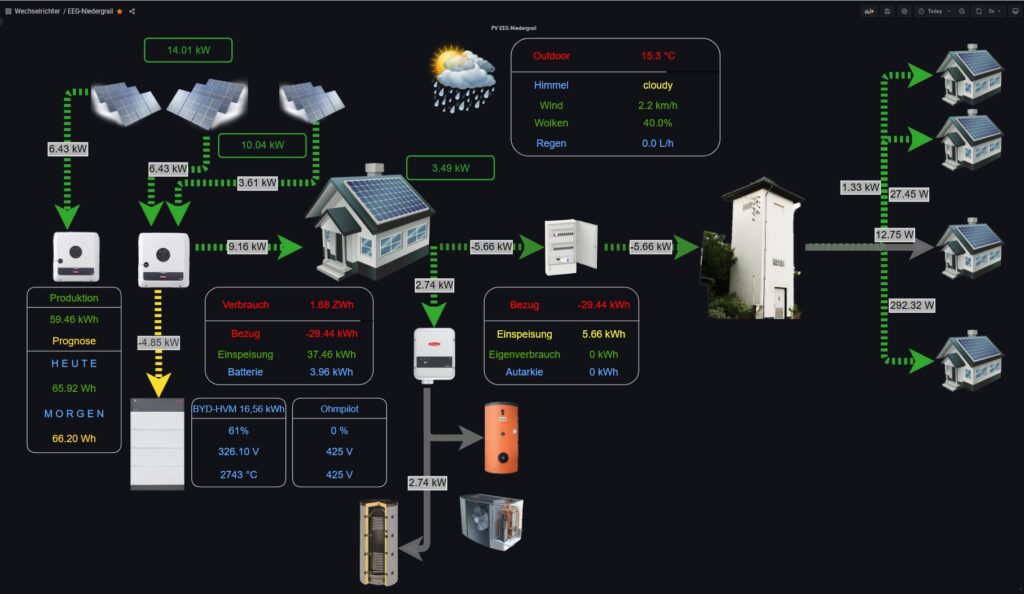
The Renewable Energy Community (REC) Niedergrail in Austria (Styria) was founded as association in January 2022. The community currently comprises 5 participants supplied with energy from two PV systems and complemented using two behind-the-meter energy storage units. Each household in the REC is equipped with energy monitoring devices facilitating real-time voltage and current measurement. Additionally, the data interfaces of the inverters connected to the PV and storage systems are utilized to access information on current and forecasted electricity generation as well as battery state-of-charge (SOC). Using specifically programmed open-source tools, the electricity flows within the REC can be clearly depicted and tracked. Through accompanying monitoring, several optimizations, such as adapting the charging and discharging behaviors of the energy storage based on weather forecasts, have been successfully implemented, significantly increasing the electricity consumption covered by the REC for the individual households. The REC aims to further tailor these systems to better match the unique energy usage patterns of the community, thereby enhancing overall energy efficiency and autonomy.
Romania - GreenMogo Energy Community - UPB + Greenome Solutions

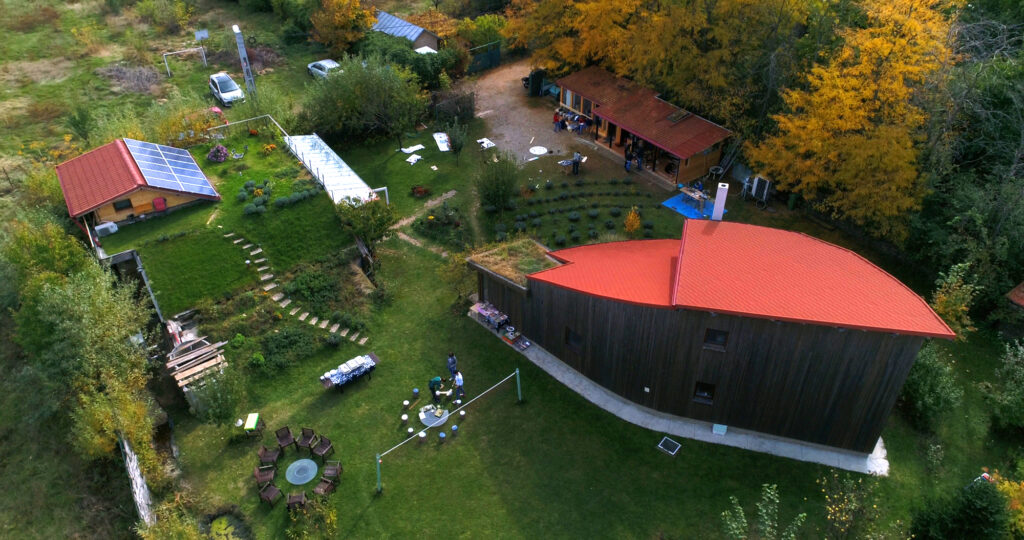
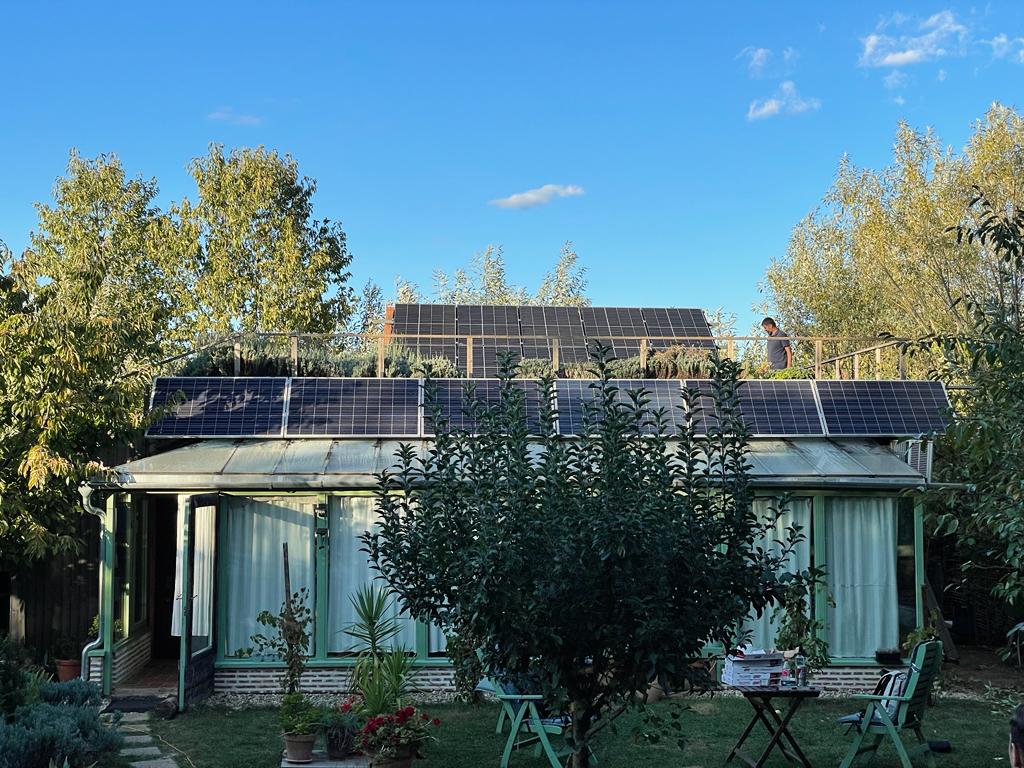
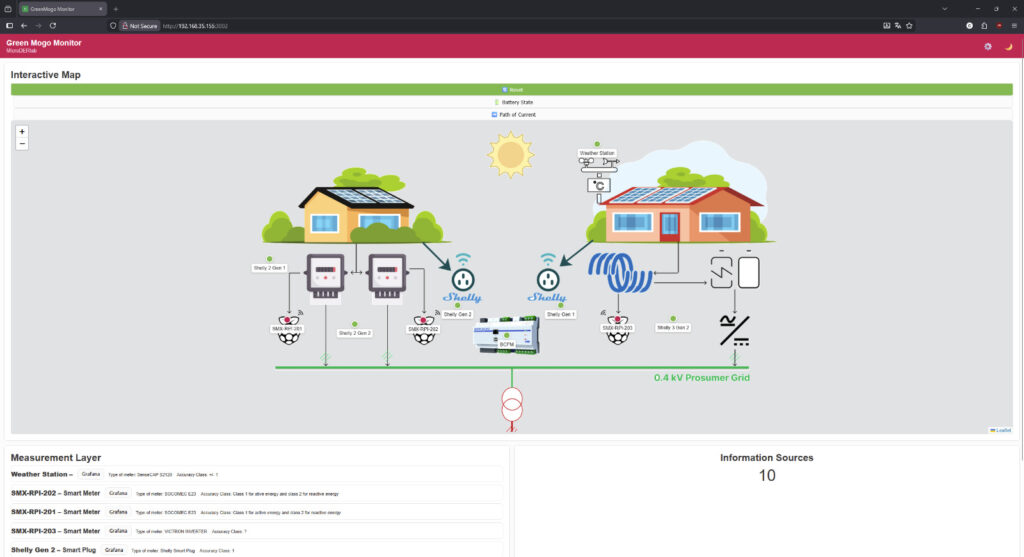
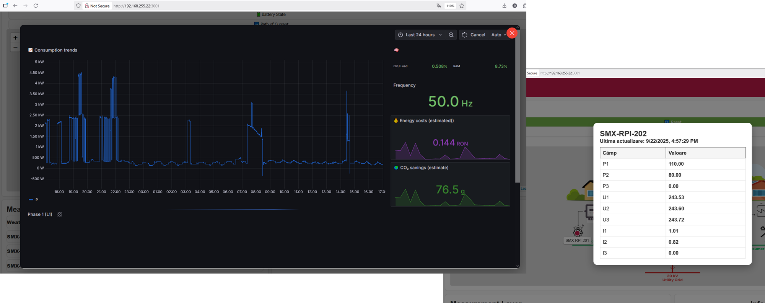
GreenMogo is a zero-energy building operating in different scenarios to teach various target groups about more sustainable ways of living and building. Within this paper, the premise acts as a regulatory restricted prosumer (following the operation of a UniRCon) providing insights on energy needs for modern local energy communities. The general grid topology of this UniRCon is presented in the figure below and consists of a family residential building (with regular home appliances) with PV generation and BESS interfaced with a Victron inverter and a heat pump for thermal energy transfer. The measurement layer consists of high-reporting rate information (1 frame/second), which is provided by energy meters operating using the Unbundled Smart Meter (USM) concept for energy use, and also provided by the Color Control GX TCP/IP integrated with the Victron Inverter for energy generation (PV and BESS).